“As I wandered, I thought of Felix. He is rarely out of my thoughts, my 20-year-old son who died in 2017…Maybe the Victorians were onto something with their elaborate mourning rituals. Today I felt I was performing one, doing something with my grief. A quiet focus on small, natural things.”
I set off for Cornwall on a most inhospitable day, the latest in an endless stream of them. I could barely see as I drove down the dual carriageway to Plymouth, sheets of rain lashing the windscreen. Birds of Firle was in the inner pocket of my rucksack, placed in a plastic sleeve as I was worried it might get ruined in the rain. I’d taken a quick look at it before I left, flicking through the black images of the birds which appeared to me like Victorian silhouettes. They gave me echoes of mourning, something which the Victorians did in an elaborate fashion.
Down in Portwrinkle, the rain eased but the wind was still very strong, making my eyes water. I walked down into the harbour, which was dry as the tide was going out, and full of sand. I stood inside it, looking at the walls around me. The harbour was full of great lumpen piles of seaweed and other debris dumped there by the sea. Bedraggled seagull feathers stuck out of the piles. There were old pieces of rope, mermaids’ purses large and small, driftwood and small bits of plastic.
I walked out of the harbour mouth and onto the long curve of grey beach. I was on the hunt for treasure, a feather perhaps, or something else. But it wasn’t about the finding, or even the seeking, it was the about the act of looking, of observing. Instead of briskly walking as I usually do, I slowed down and started to examine the small things around me. There were ribbons of bright pink seaweed and tiny cowrie shells resting on top of the shingle. In the rockpools, crimson anemones flowered underwater with very slight movement. A patch of snakelocks anemones glowed green, giving me a thrill of excitement.
As I wandered, I thought of Felix. He is rarely out of my thoughts, my 20-year-old son who died in 2017. I thought back to Birds of Firle. A book born out of grief. A small focus on the birds as a way of putting the grief somewhere. I sat down on a rock and looked at the book, slowly this time. The birds seemed so fleeting, so slight, and yet somehow they symbolised something, or maybe nothing at all? Maybe they are the embodiment of a feeling, any feeling you want, whether it be grief, joy or hope.
I picked up a small, smooth mermaid’s purse. It was an odd, pale brown colour, ridged like my fingernails, with tiny curling tentacles off each of its four corners, like the tendrils on a sweet pea. A place where new life started. I kept it in my hand and walked further along the shore, and then up to the tide line. I found an unusual piece of bright, coral pink seaweed, its firm branches dotted with tiny pink buds. New life forming.
There was a big rectangular flat rock sticking up from the middle of the reef at the front of the beach. It looked like a large grave stone, tilting at a dangerous angle. I went up to it and leaned into it and closed my eyes, thinking of Felix. I rested against its cold, barnacled hardness and listened as the oyster catchers trilled in the wind and the waves pounded the rocks. My memorial stone.
Maybe the Victorians were onto something with their elaborate mourning rituals. Today I felt I was performing one, doing something with my grief. A quiet focus on small, natural things.
“As I wandered, I thought of Felix. He is rarely out of my thoughts, my 20-year-old son who died in 2017…Maybe the Victorians were onto something with their elaborate mourning rituals. Today I felt I was performing one, doing something with my grief. A quiet focus on small, natural things.”
I set off for Cornwall on a most inhospitable day, the latest in an endless stream of them. I could barely see as I drove down the dual carriageway to Plymouth, sheets of rain lashing the windscreen. Birds of Firle was in the inner pocket of my rucksack, placed in a plastic sleeve as I was worried it might get ruined in the rain. I’d taken a quick look at it before I left, flicking through the black images of the birds which appeared to me like Victorian silhouettes. They gave me echoes of mourning, something which the Victorians did in an elaborate fashion.
Down in Portwrinkle, the rain eased but the wind was still very strong, making my eyes water. I walked down into the harbour, which was dry as the tide was going out, and full of sand. I stood inside it, looking at the walls around me. The harbour was full of great lumpen piles of seaweed and other debris dumped there by the sea. Bedraggled seagull feathers stuck out of the piles. There were old pieces of rope, mermaids’ purses large and small, driftwood and small bits of plastic.
I walked out of the harbour mouth and onto the long curve of grey beach. I was on the hunt for treasure, a feather perhaps, or something else. But it wasn’t about the finding, or even the seeking, it was the about the act of looking, of observing. Instead of briskly walking as I usually do, I slowed down and started to examine the small things around me. There were ribbons of bright pink seaweed and tiny cowrie shells resting on top of the shingle. In the rockpools, crimson anemones flowered underwater with very slight movement. A patch of snakelocks anemones glowed green, giving me a thrill of excitement.
As I wandered, I thought of Felix. He is rarely out of my thoughts, my 20-year-old son who died in 2017. I thought back to Birds of Firle. A book born out of grief. A small focus on the birds as a way of putting the grief somewhere. I sat down on a rock and looked at the book, slowly this time. The birds seemed so fleeting, so slight, and yet somehow they symbolised something, or maybe nothing at all? Maybe they are the embodiment of a feeling, any feeling you want, whether it be grief, joy or hope.
I picked up a small, smooth mermaid’s purse. It was an odd, pale brown colour, ridged like my fingernails, with tiny curling tentacles off each of its four corners, like the tendrils on a sweet pea. A place where new life started. I kept it in my hand and walked further along the shore, and then up to the tide line. I found an unusual piece of bright, coral pink seaweed, its firm branches dotted with tiny pink buds. New life forming.
There was a big rectangular flat rock sticking up from the middle of the reef at the front of the beach. It looked like a large grave stone, tilting at a dangerous angle. I went up to it and leaned into it and closed my eyes, thinking of Felix. I rested against its cold, barnacled hardness and listened as the oyster catchers trilled in the wind and the waves pounded the rocks. My memorial stone.
Maybe the Victorians were onto something with their elaborate mourning rituals. Today I felt I was performing one, doing something with my grief. A quiet focus on small, natural things.
“As I wandered, I thought of Felix. He is rarely out of my thoughts, my 20-year-old son who died in 2017…Maybe the Victorians were onto something with their elaborate mourning rituals. Today I felt I was performing one, doing something with my grief. A quiet focus on small, natural things.”
I set off for Cornwall on a most inhospitable day, the latest in an endless stream of them. I could barely see as I drove down the dual carriageway to Plymouth, sheets of rain lashing the windscreen. Birds of Firle was in the inner pocket of my rucksack, placed in a plastic sleeve as I was worried it might get ruined in the rain. I’d taken a quick look at it before I left, flicking through the black images of the birds which appeared to me like Victorian silhouettes. They gave me echoes of mourning, something which the Victorians did in an elaborate fashion.
Down in Portwrinkle, the rain eased but the wind was still very strong, making my eyes water. I walked down into the harbour, which was dry as the tide was going out, and full of sand. I stood inside it, looking at the walls around me. The harbour was full of great lumpen piles of seaweed and other debris dumped there by the sea. Bedraggled seagull feathers stuck out of the piles. There were old pieces of rope, mermaids’ purses large and small, driftwood and small bits of plastic.
I walked out of the harbour mouth and onto the long curve of grey beach. I was on the hunt for treasure, a feather perhaps, or something else. But it wasn’t about the finding, or even the seeking, it was the about the act of looking, of observing. Instead of briskly walking as I usually do, I slowed down and started to examine the small things around me. There were ribbons of bright pink seaweed and tiny cowrie shells resting on top of the shingle. In the rockpools, crimson anemones flowered underwater with very slight movement. A patch of snakelocks anemones glowed green, giving me a thrill of excitement.
As I wandered, I thought of Felix. He is rarely out of my thoughts, my 20-year-old son who died in 2017. I thought back to Birds of Firle. A book born out of grief. A small focus on the birds as a way of putting the grief somewhere. I sat down on a rock and looked at the book, slowly this time. The birds seemed so fleeting, so slight, and yet somehow they symbolised something, or maybe nothing at all? Maybe they are the embodiment of a feeling, any feeling you want, whether it be grief, joy or hope.
I picked up a small, smooth mermaid’s purse. It was an odd, pale brown colour, ridged like my fingernails, with tiny curling tentacles off each of its four corners, like the tendrils on a sweet pea. A place where new life started. I kept it in my hand and walked further along the shore, and then up to the tide line. I found an unusual piece of bright, coral pink seaweed, its firm branches dotted with tiny pink buds. New life forming.
There was a big rectangular flat rock sticking up from the middle of the reef at the front of the beach. It looked like a large grave stone, tilting at a dangerous angle. I went up to it and leaned into it and closed my eyes, thinking of Felix. I rested against its cold, barnacled hardness and listened as the oyster catchers trilled in the wind and the waves pounded the rocks. My memorial stone.
Maybe the Victorians were onto something with their elaborate mourning rituals. Today I felt I was performing one, doing something with my grief. A quiet focus on small, natural things.

Sophie Pierce is a journalist working in both broadcast & print – and the author of two wild swimming books – who lives on the edge of Dartmoor in Devon. In 2017, Sophie’s life changed forever when her twenty-year-old son Felix died suddenly and unexpectedly. Thrown into an unimaginable new reality, she had to find a way to survive. By writing letters to Felix – composed during walks and swims taken close to his burial place by the River Dart – Sophie gradually learned how to live in the landscape of sudden loss, navigating the weather and tides of grief. Her memoir The Green Hill (Unbound, 2023) collects these letters alongside Sophie’s account of the years following Felix’s death, into which she weaves poignant memories of his life. What results is a deeply moving, beautifully captured record of how – amid the rivers and rocks of Dartmoor, and in the sea off the South Devon coast – Sophie was able to hold on to and nurture her bond with Felix, both in her mind and through a physical engagement with the landscape: actively mourning, rather than grieving.
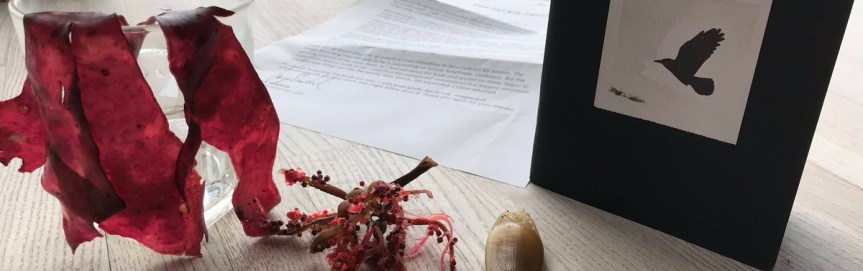
Birds of Firle is a single edition book by Tanya Shadrick being posted sequentially to 100 collaborators around the world, inviting responses to the idea of Grief and Hope as the things with feathers. Each recipient spends a few days with the book, before returning it with a hand-written letter and other small artefacts.
Birds of Firle is a single edition book by Tanya Shadrick being posted sequentially to 100 collaborators around the world, inviting responses to the idea of Grief and Hope as the things with feathers. Each recipient spends a few days with the book, before returning it with a hand-written letter and other small artefacts.
Birds of Firle is a single edition book by Tanya Shadrick being posted sequentially to 100 collaborators around the world, inviting responses to the idea of Grief and Hope as the things with feathers. Each recipient spends a few days with the book, before returning it with a hand-written letter and other small artefacts.
 selkiepress.com
Lovely. Very moving…
LikeLiked by 1 person